

Know Your Rights
All people in the United States, regardless of immigration status, have certain rights and protections under the U.S. Constitution. The resources on this page can help you know your rights when you are stopped by law enforcement officers, or how to protect your workplace as a business owner. Please be aware that the Library can provide you access to information resources, but our staff are unable to provide legal advice.
ACLU Know Your Rights Cards
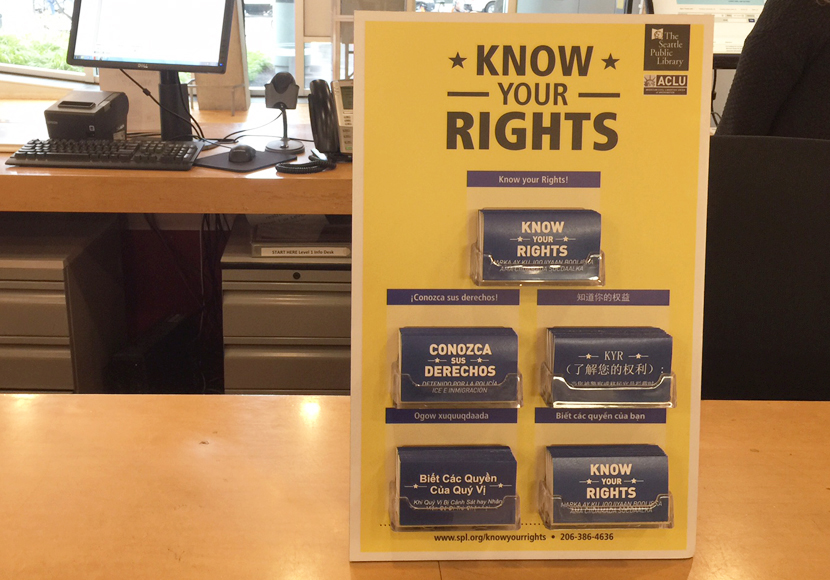
These pocket-sized Know Your Rights cards detail your rights if you’re stopped by law enforcement officers, such as local police and federal immigration enforcement officers. Print and share these cards in your communities. Created in partnership with The American Civil Liberties Union (ACLU).
ILRC Red Cards
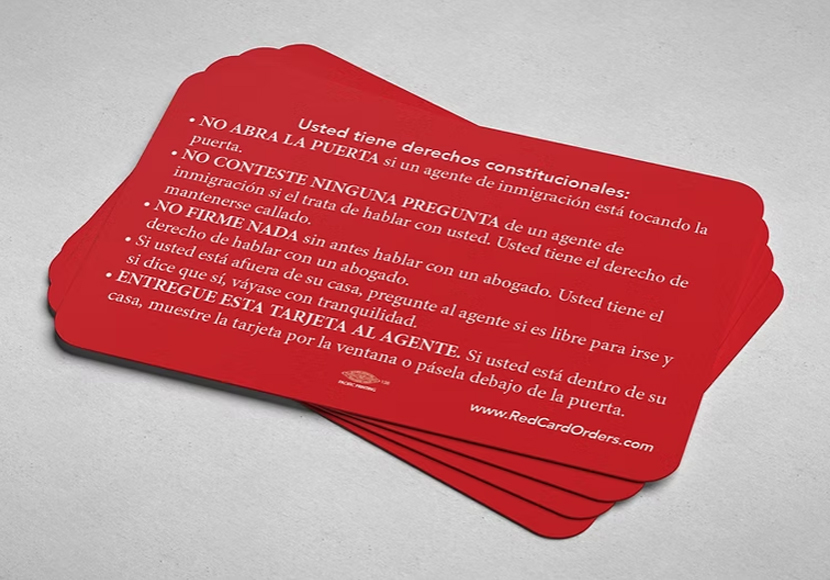
The Immigrant Legal Resource Center’s Red Cards help people assert their rights and defend themselves in many situations, such as when federal immigration enforcement officers go to a home. Print and share these cards in your communities.
- English
- አማርኛ (Amharic)
- اَلْعَرَبِيَّةُ (Arabic)
- 中文 (Chinese)
- فارسی (Farsi)
- Français (French)
- Kreyòl Ayisyen (Haitian Creole)
- Hmoob (Hmong)
- ភាសាខ្មែរ (Khmer)
- 한국어 (Korean)
- َلْعَرَبِيَّةُ (Pashto)
- Português (Portuguese)
- ਪੰਜਾਬੀ (Punjabi)
- Pусский (Russian)
- Español (Spanish)
- Tagalog
- ትግርኛ (Tigrinya)
- українська мова (Ukrainian)
- Tiếng Việt (Vietnamese)
Know Your Rights with Immigration Enforcement Officers
The Immigrant Defense Project has infographics, fliers, booklets, and more that detail your rights during encounters with federal immigration enforcement officers at home, on the street, in a car, or in a courthouse.
Many resources are available in multiple languages, and the entire page is available in Spanish.
The Washington State Office of the Attorney General has also created a flier, “Know Your Rights: Civil Immigration Enforcement in Washington.” This flier is available in multiple languages and provides guidance on what to do if you are approached by an immigration officer; what to do if you are arrested, detained or taken into custody; and limits on local and state participation in enforcing federal immigration law.
Resources for Individuals & Families
The following resources are from the Seattle Office of Immigrant and Refugee Affairs (OIRA)’s Know Your Rights page. Visit OIRA’s page for their full list of resources.
Family Safety Planning
- Training in English and Spanish on Preparing Family Safety Plans, Legal Counsel for Youth & Children
- Step-by-Step Family Preparedness Plan, Immigrant Legal Resource Center
Legal Support: Local Legal Services Providers & Advocacy Organizations
- Legal Service Providers in Washington State, Immigration Advocates Network
- AILA's Immigration Lawyer Search, The American Immigration Lawyers Association (AILA) WA
Asylum-related Resources
- Informational Videos for Asylum Seekers, OIRA and Northwest Immigrant Rights Project (NWIRP) – This series of informational videos is intended for asylum seekers living in Seattle or Washington state to help them navigate the immigration and asylum process. Videos are available in English, Spanish, French, and Portuguese.
- Migrant and Asylum Seeker Resource Guide (Spanish), OIRA – This document provides general information for migrant families who are seeking assistance from the City of Seattle. The resource guide includes essential phone numbers, information on protecting yourself against scams, free legal services, a list of immigration attorneys accepting new clients, English language classes, available shelters, King County Homelessness Authority Resources, and regional access points in King County.
Resources for Business Owners & Employers
The following resources are from the Seattle Office of Immigrant and Refugee Affairs (OIRA)’s Know Your Rights page. Visit OIRA’s page for their full list of resources.
- A Toolkit For Organizations Responding To Mass Worksite Immigration Raids, Tennessee Immigrant and Refugee Rights Coalition (TIRRC) and the National Immigration Law Center (NILC)
- A Guide for Employers: What to Do if Immigration Comes to Your Workplace, NILC & National Employment Law Project (NELP)
- Know Your Rights for Business Owners and Employers – OIRA partnered with the Seattle Office of Economic Development (OED) to host a virtual “Know Your Rights” training for business owners and employers to help explain how businesses can follow immigration regulations and how to protect both their workers and workplace. Watch a video recording of the training and download the training slides.
Rapid Response Phone Numbers
- Deportation Defense Hotline – Call or text 1-844-724-3737 to report immigration enforcement activity, or to get connected to emergency resources. Hotline hours are Monday – Friday, 6 a.m. – 6 p.m. Operated by Washington Immigrant Solidarity Network (WAISN). Interpretation is available in 300+ languages.